
March 2, 2026

Sossusvlei is the name by which the deep red dunes of the Namib-Naukluft Park are commonly known. The Namib Desert of Namibia is the oldest desert in the world and this part of the desert is home to some of the tallest sand dunes in the world. Their deep ochre colour, contrasting with the rich blue sky and dotted with desert-adapted Camelthorn trees all combine to create an alien-like landscape worthy of any postcard.


A Sossusvlei safari begins in the dark and rewards the early start.
A Sossusvlei safari is built around landscape rather than a game list. Days start before dawn so that you reach the dunes of the Namib-Naukluft Park as the first light turns the sand from ochre to deep red, and they usually end with a sundowner drive or an evening at the lodge or campsite. Dead Vlei is described as one of the most photographed areas in Sossusvlei, and the 3-day and 4-day tours on this page are the quickest way to add it to a wider Namibia safari.
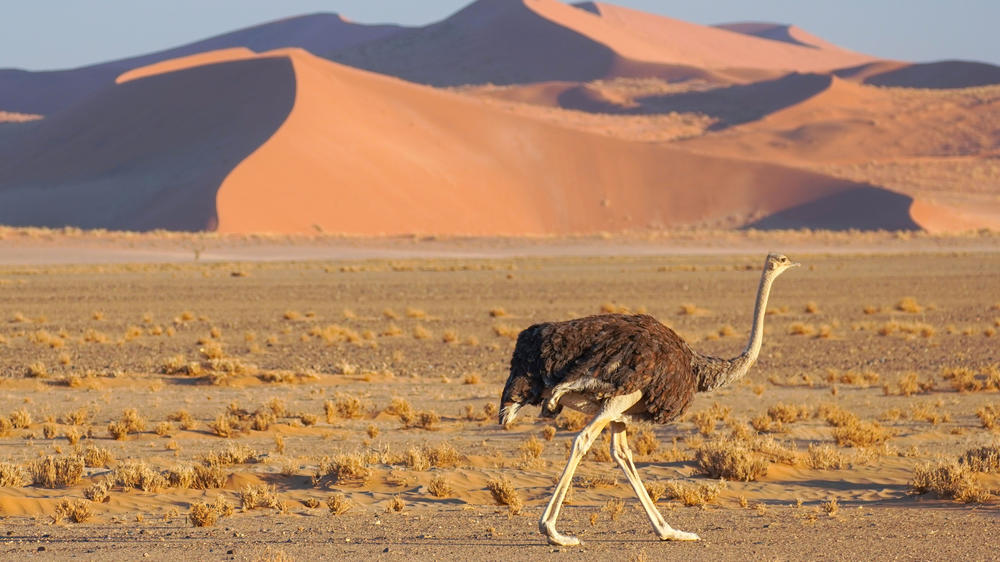
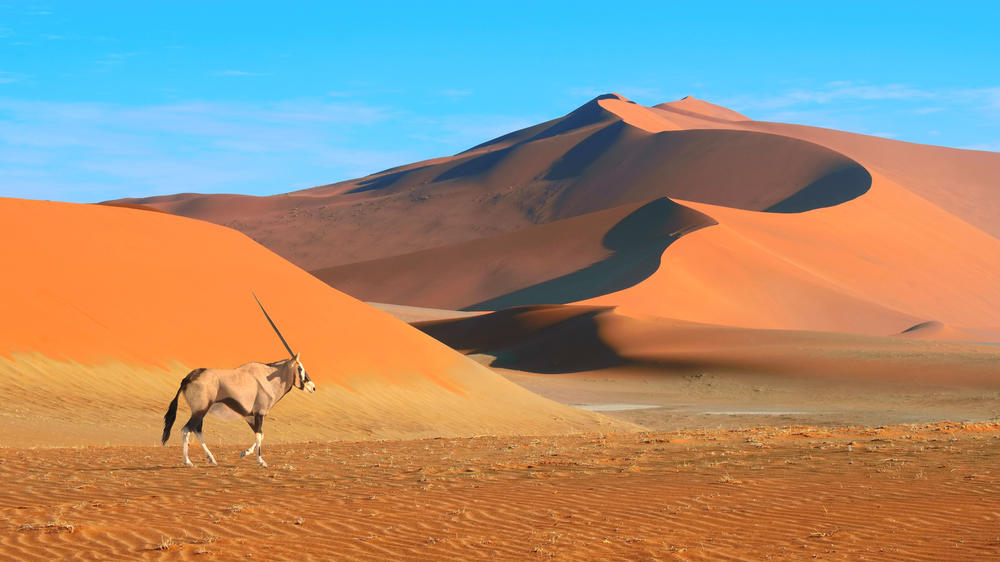
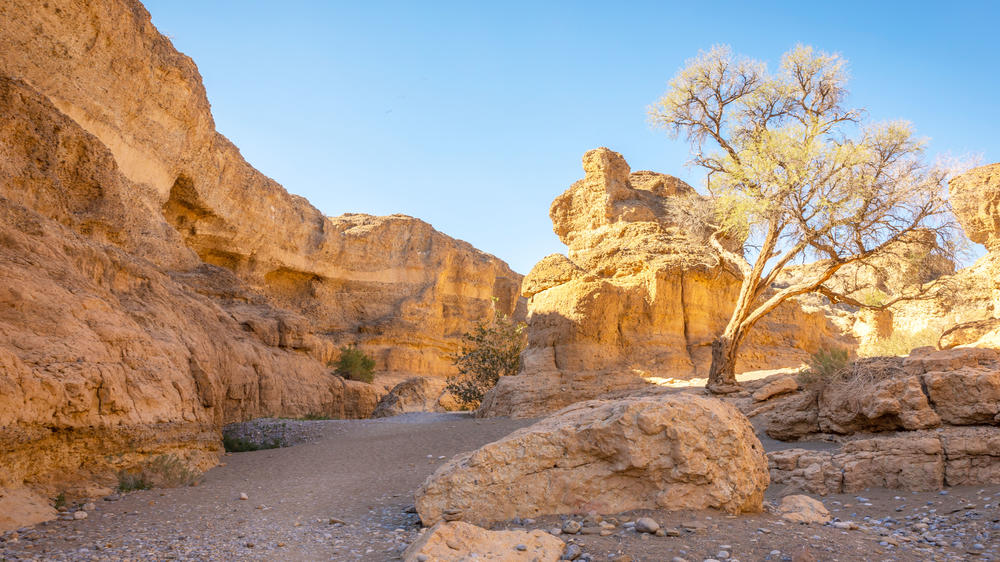
Between the dunes you walk across Dead Vlei, a pan that was once a lake and dried up thousands of years ago, leaving fossilised trees standing on the white clay. Sesriem Canyon, a gorge about 1 km long and 30 to 40 m deep, is usually visited in the afternoon, and its pools refill after good rains. Desert-adapted animals such as ostrich and gemsbok can be seen on the plains around the dunes.
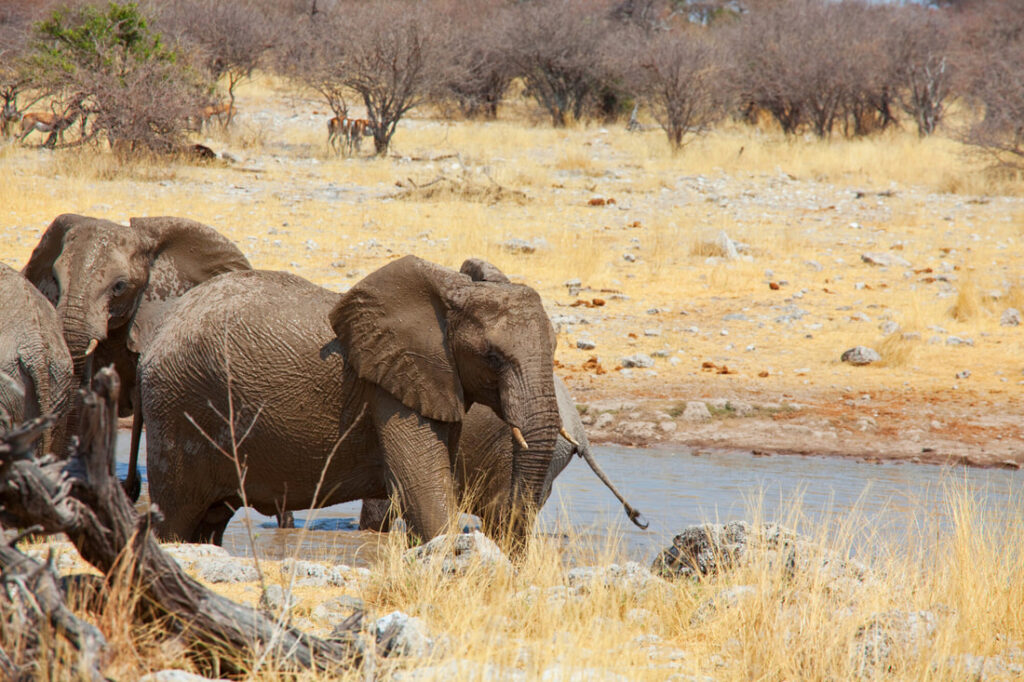
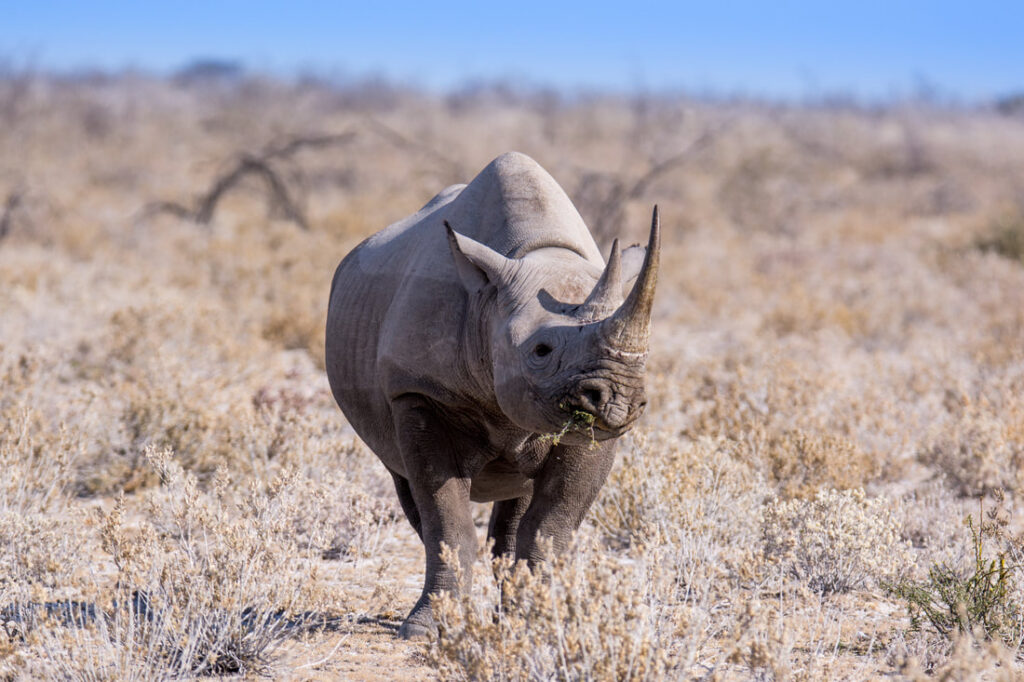
The desert is not a big game destination, so most travellers pair a Sossusvlei safari with Etosha for classic game viewing and with Swakopmund and the coast. The 6-day Taste of Namibia links Sesriem, Swakopmund and southern Etosha, and the 9-day Wildlife, Coast & Dunes Safari covers the same ground at a slower pace. The Namibia safari guide sets out how the regions fit together.
What each style of tour covers, so the comparison is clear before you enquire.
The twelve tours on this page come in three styles, group camping, group accommodated and tailored driven, and what is included differs between them. The table summarises what the itineraries on our website list for each style. Exact nights, meals and activities are set out on each tour page.
| Style | Transport and guiding | Accommodation and meals | At Sossusvlei |
|---|---|---|---|
| Group camping 6 tours, 3 to 12 days |
Airport transfers, a safari vehicle or custom-built overland bus, and a professional English-speaking guide. | Camping with camping equipment. A sleeping bag and small pillow can be hired for NAD 40 per day. The 6-day Taste of Namibia, 6-day Desert, Ghost Town & Canyon Safari and 3-day Oneway Express are full board. Other tours list meals in the itinerary, and some include a few nights in en-suite twin rooms. | National Park entry fees. A guided Sossusvlei excursion with a 4×4 shuttle across the riverbed. Dune 45 and Sesriem Canyon appear in every camping itinerary. |
| Group accommodated 3 tours, 3 to 7 days |
A safari vehicle with a professional English-speaking guide. Airport transfers are included on the 4-day and 7-day tours, and the 3-day Coast to Desert Safari starts in Swakopmund. | Twin-share rooms, en-suite on the 4-day and 7-day tours. The 3-day tour includes 2 nights at Namib Desert Lodge, 2 dinners, 1 brunch pack and 1 breakfast. The longer tours list meals as mentioned in the itinerary. | National Park entry fees and a Sossusvlei excursion. The 4-day and 7-day tours include the 4×4 shuttle and cheetah tracking at Solitaire. The 3-day tour adds a sundowner dune drive in the Gondwana Namib Park. |
| Tailored driven 3 tours, 3 to 10 days |
Shuttle transfers in a Toyota Quantum, Mercedes Sprinter or Iveco, depending on group size, with a professional English-speaking driver. Airport transfers are included on the 10-day tour only. | The 3-day tours include 2 nights at Namib Desert Lodge, 2 dinners, 1 brunch pack and 1 breakfast. The 10-day tour includes 9 nights on a bed and breakfast basis. | A shared Sossusvlei and Sesriem excursion. The 3-day tours include National Park entry fees and a shared sundowner dune drive. On the 10-day tour, Etosha park fees of about NAD 560 per person are paid locally. |
A full Sossusvlei day starts before sunrise so that you are at the dunes while the light is low. On the camping and accommodated itineraries, the first stop is Dune 45. From there the road continues to the car park at the edge of the Tsauchab riverbed, and a 4×4 shuttle carries you across the final sandy stretch. Your guide then leads the walk to Dead Vlei on foot. Sesriem Canyon follows in the afternoon on most itineraries. National Park entry fees are listed as included on the tours with a Sossusvlei excursion. The 10-day tour page does not state them.
Flights, drinks, meals and activities not mentioned in the itinerary, entry visas and travel insurance are not included on any tour. Gratuities are not included, and the tour pages suggest NAD 180 per person per day for the guide and lodge staff, or US$10 on the 3-day Oneway Express and Coast to Desert Safari. Camping tours generally exclude towels and a sleeping bag. Each tour page also notes that increases in government tax, park fees and fuel supplements are not covered. Airport transfers are not included on the 3-day tailored driven tours or the 3-day Coast to Desert Safari.
Distances in Namibia are measured in hours, and the road to the dunes is no exception.
International visitors arrive at Hosea Kutako International Airport in Windhoek, which is the airport used for airport transfers on our Namibia tours. From there the road to Sesriem covers about 345 km and takes four to five hours, so our 3-day tours spend much of the first day on this drive. The 6-day Desert, Ghost Town & Canyon Safari starts from Swakopmund Airport instead, with a transfer of around three hours to Sesriem Campsite. Self-drive itineraries also start at Hosea Kutako International Airport, where the vehicle is collected. Fly-in travellers can land at Sesriem Airstrip, near Sesriem, on a charter or lodge flight, and small aircraft of this kind typically leave from Eros Airport in Windhoek. A Safari Specialist can advise which arrival point suits your route, and the Namibia safari guide covers wider travel planning.
| Leg | Distance | Time or note |
|---|---|---|
| Windhoek to Sesriem | About 345 km | 4 to 5 hours, or about 4½ hours on the self-drive itinerary |
| Swakopmund to Sesriem | Varies by route | About 3 to 5 hours, depending on the route and stops |
| Sesriem to Dune 45 | 45 km | On the road into the park, usually the first stop at sunrise |
| Sesriem to the car park at the riverbed | 60 km | Two-wheel-drive vehicles stop here |
| Car park to Sossusvlei | 5 km | By 4×4 shuttle across the Tsauchab riverbed |
| Sesriem to Sesriem Canyon | 4 km | A short afternoon excursion |
Fuel stops in Namibia can be far apart, and travel days should be planned with that in mind. Because Sossusvlei is 65 km from Sesriem, it is worth allowing time for the drive in and out of the park on the same day as your dune visit.
Many travellers drive themselves, and our tailored self-drive safaris are planned around this, with pre-booked accommodation, GPS files, offline maps, turn-by-turn driving notes and 24/7 local assistance. On the 8-day Namibia Highlights self-drive, the drive from Windhoek to Desert Quiver Camp, just outside the gate of the Namib-Naukluft National Park, takes about 4½ hours. On the day in the dunes, the road runs on tar to the car park, after which the tar ends and it is another 5 km to the dunes. From the car park a 4×4 shuttle runs to the dunes, or you can walk. The following leg from Sesriem to Swakopmund takes about 4½ hours, with suggested stops at Solitaire and Walvis Bay.
That itinerary uses a Toyota Hilux Double Cab 4×4 or similar from December to April, and a Toyota Urban Cruiser or similar from May to November, both with unlimited kilometres, full insurance cover and a cooler box. Fuel and park fees are not included, and fuel stops in Namibia can be far apart, so fill the tank whenever you pass a station.
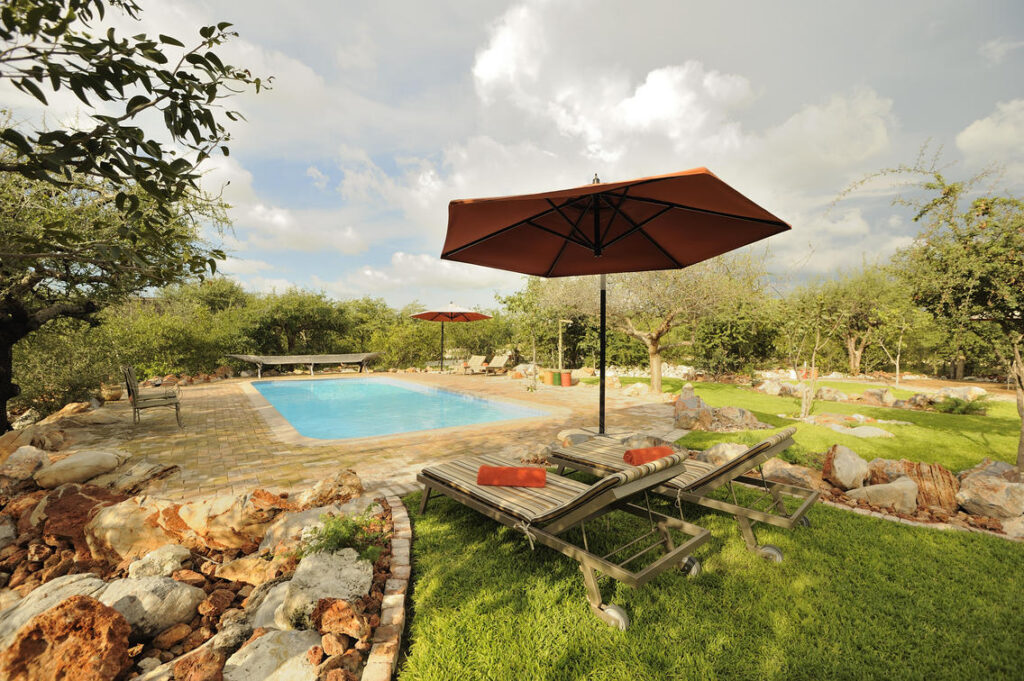
There is no accommodation at Sossusvlei itself, so visitors stay at Sesriem, 65 km away, or at lodges nearby. Our camping tours use Sesriem Campsite, which sits inside the park gate at the Sossusvlei entrance, and Desert Camp is used on the accommodated tours. Namib Desert Lodge lies 60 km north of Sesriem and is the base for the 3-day tours, which include a sundowner dune drive in the Gondwana Namib Park.
Sunrise in the dunes is the reason for the pre-dawn start. Itineraries leave the campsite or lodge in the dark so that guests are at the park gate for sunrise, and a very early breakfast is normal on these days. The winter months of June to August bring soft light and clear skies for photography.
Visitors often ask which dune to climb. Both are worth seeing, and they suit different plans. The table sets them side by side, using what our itineraries and the park descriptions state.
| Dune 45 | Big Daddy | |
|---|---|---|
| Where | 45 km from Sesriem, on the road into the park. The name comes from that distance. | The dune that forms the backdrop to Dead Vlei, reached after the 4×4 shuttle across the riverbed. |
| Effort | Optional. You can climb to a vantage point or simply walk around the base. | Strenuous. Over 300 metres tall and the tallest dune visitors can climb in the park. Up to an hour to reach the top. |
| Best for | Sunrise and sunset photography, and anyone who prefers an optional climb. | Fit walkers who want the views from the top and the five-minute run back down. |
| Timing | Usually the first stop, so you are there as the sun rises. | Climbed after the shuttle crossing, as it forms the backdrop to Dead Vlei. |
| Tips | Arrive before sunrise and watch the colours change on the dune face. | Take plenty of water. Expect to slide one step back for every two forward. |
For a shorter climb, Big Momma is described on the 3-day shuttle itinerary as a slow 30-minute walk to the top. Not every itinerary visits every dune. Dune 45 is on each of the camping itineraries and on the 7-day Namibian Highlights, while Big Daddy is mentioned on the 3-day Coast to Desert Safari and the 10-day Unguided Wanderer Shuttle Safari. Your Safari Specialist can confirm which dunes your chosen tour includes and adjust the plan if you want to climb a particular one.
Sossusvlei and Sesriem are the beating heart of Namibia’s desert splendour.
With their dramatic landscapes, shifting dunes, and surreal salt pans, these destinations offer travellers a chance to step into an otherworldly wilderness unlike anywhere else on earth.
Within the Namib-Naukluft park are a number of sights that have become firm tourist favourites over the years. Although it is the name used to refer to the entire area, Sossusvlei is actually the name given to a small white salt pan situated at the base of an imposing red sand dune. Nearby is the less well-known, but more spectacular Dead Vlei, which used to be an impressive lake, but dried up thousands of years ago, leaving fossilised trees standing in the middle of an expansive white salt pan. The dune that forms the backdrop of Dead Vlei is known as Big Daddy. Standing at over 300 metres tall, it is the tallest dune that visitors have the opportunity of climbing inside the park. Climbing a sand dune is something else, as for every two steps forward you take, you slide one step backwards. But for those with strong legs and lots of water, the views at the top are worth it. And although it may take up to an hour to climb to the top, it only takes 5 minutes for the brave to run back down again.

A year-round desert wonder with seasonal highlights.
The Namib Desert can be visited year-round, but each season paints Sossusvlei and Sesriem in a different light. From cool, crisp winter mornings to vibrant summer skies after rare rains, the desert is always alive with beauty.
Cooler days and crisp nights make for comfortable desert exploration.
Ideal for photography, with soft light and clear skies.
Hotter days, but occasional rains transform the desert with bursts of green.


Venture into Namibia’s most photogenic landscapes with Indigo Safaris. From luxury lodges to adventurous camping, we’ll tailor the perfect desert escape.
